Valve Packing Manufacturer in China

Valve packing is a critical component in valve assemblies, ensuring a reliable seal around the valve stem to prevent leakage of process fluids. Proper packing selection and installation are essential to maintaining valve performance, reducing maintenance, and extending service life. This article provides a comprehensive overview of valve packing types, materials, sealing mechanisms, and special considerations such as corrosion control.
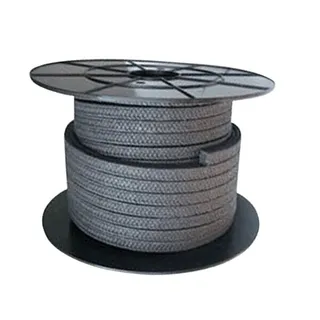
Our China Ramie Fiber Gland Packing is a high-quality solution for valve applications. Braided from durable ramie fiber yarn, the packing is coated with graphite to enhance its lubrication and thermal stability. Compliant with the API 624 standard, this packing ensures reliability and compatibility with industry requirements. Available in sizes ranging from 1/8 to 2 inches, it can withstand pressures up to 100 bar and has a density of 1.25-1.35 g/cm³, making it suitable for demanding industrial environments.

Our Cotton Fiber Braided Packing is a versatile valve packing solution designed for reliable performance. Manufactured from high-quality cotton fibers, the packing is braided to ensure strength and flexibility. It is coated with graphite, enhancing its lubrication and thermal stability. Available in sizes ranging from 1/8 to 2 inches, this packing can withstand pressures up to 70 bar and has a density of 1.25 g/cm³, making it suitable for a variety of industrial applications.
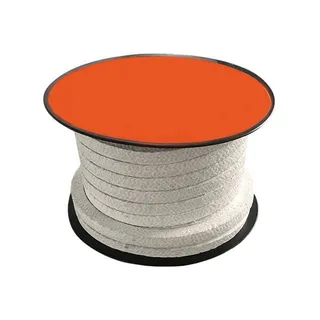
Our PTFE Impregnated Asbestos Packing is a high-performance valve gland packing designed for demanding industrial applications. The packing is braided from asbestos fibers, providing excellent durability and heat resistance. It is impregnated with PTFE to enhance its lubrication properties and chemical resistance. Compliant with both ISO 15848-1 and API 624 standards, this packing ensures reliability and compatibility with industry requirements. Available in sizes ranging from 1/8 to 2 inches, it can withstand pressures up to 100 bar (10 MPa) and has a density of 1.2 g/cm³, making it suitable for a wide range of applications.
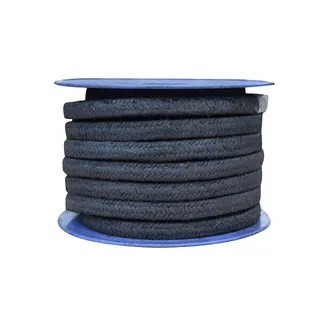
Our Asbestos Gland Packing Factory specializes in producing high-performance valve packing. The packing is meticulously woven from asbestos threads, providing exceptional durability and heat resistance. It is further enhanced with graphite impregnation, which improves lubrication and thermal conductivity. Compliant with the API 624 standard, this packing ensures reliability and compatibility with industry requirements. Available in sizes ranging from 1/8 to 2 inches, it can handle pressures up to 15 bar (1.5 MPa), making it ideal for a wide range of industrial applications.
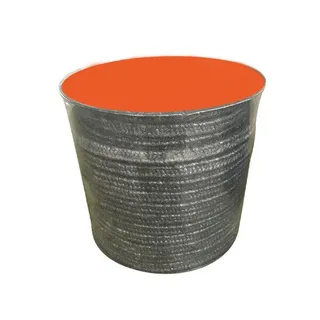
Our Fiberglass Valve Packing Plant produces high-quality packing materials designed for superior performance in valve applications. The packing is made from fiberglass yarn, braided for strength and durability. It is coated with graphite powder to enhance lubrication and thermal stability, and reinforced with steel wire to provide additional structural integrity. The product complies with the API 624 standard, ensuring reliability and compatibility with industry requirements. Available in sizes ranging from 1/8 to 2 inches, it can withstand pressures up to 150 bar and has a density of 1.4 g/cm³, making it suitable for demanding industrial environments.
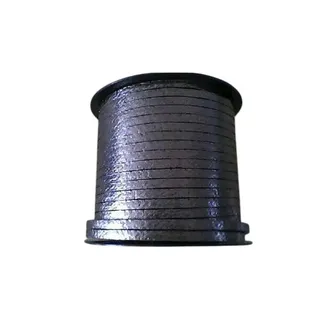
The Inconel Wire Reinforced Valve Packing Factory produces high-performance valve packing braided from expanded graphite yarn and reinforced with Inconel wire for enhanced strength and durability. This packing meets stringent industry standards, including ISO 15848-1 and API 624. Available in sizes ranging from 1/4 to 2 inches, it can withstand extreme pressures up to 600 bar (60 MPa) and has a density of 1.75 g/cm³, making it ideal for high-pressure applications in demanding industrial environments.
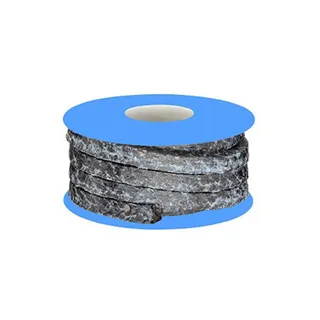
The PTFE Impregnated Graphite Packing Manufacturer specializes in producing high-quality valve packing. This packing is made from yarn braided graphite and impregnated with PTFE for enhanced durability and chemical resistance. Certified to API 624 standards, it is available in sizes ranging from 1/4 to 2 inches and DN8 to DN50. It can withstand pressures up to 200 bar (20 MPa) and has a density of 1.2 g/cm³, making it suitable for a wide range of demanding industrial applications.
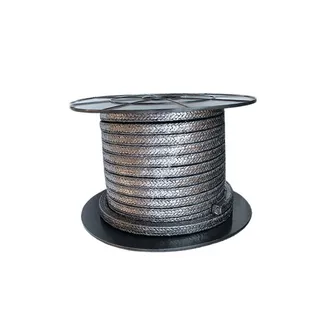
The Multi-fiber Valve Packing Supplier offers high-performance packing solutions braided from expanded graphite yarn and reinforced with carbon fiber corners for enhanced durability and strength. Certified to API 624 standards, this packing is available in sizes ranging from 1/4 to 2 inches and can withstand pressures up to 200 bar (20 MPa), making it ideal for demanding industrial valve applications.
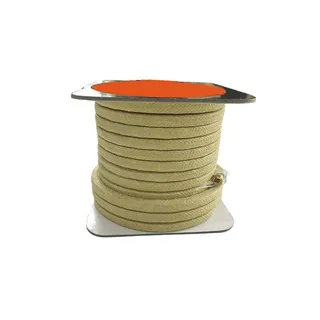
The China Aramid Fiber Packing Factory specializes in producing high-quality valve gland packing with a silicon rubber core. This packing is designed for robust performance, featuring a density of 1.4 g/cm³ and capable of withstanding pressures up to 300 bar. Available in sizes ranging from 1/4 to 2 inches, it meets stringent environmental and safety standards such as TA-Luft, ISO 15848-1, and API 624, making it suitable for a wide range of industrial applications.
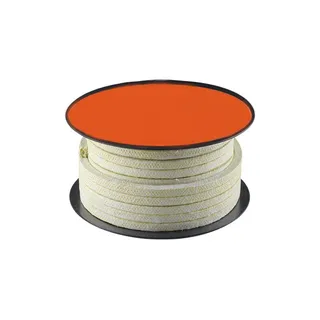
The Aramid Fiber Gland Packing Plant offers high-performance packing solutions designed for demanding industrial applications. This plant produces aramid fiber yarn that is expertly braided and impregnated with PTFE emulsion, enhancing its durability and chemical resistance. Certified to ISO 15848-1 and API 624 standards, it ensures compliance with international quality and safety norms. Available in sizes ranging from 1/4 to 2 inches and DN8 to DN50, it can withstand pressures up to 250 bar (25 MPa), making it ideal for high-pressure environments.
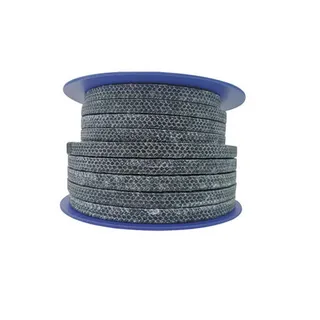
Our Carbonized Fiber Valve Packing Factory offers high-performance packing materials impregnated with PTFE. Available in sizes from 1/8 to 2 inches, this packing can withstand pressures up to 150 bar (15 MPa) and has a density range of 1.15 to 1.35 g/cm³. It meets stringent environmental and safety standards, including TA-Luft, API 624, and ISO 15848-1. These features make it suitable for a wide range of industrial applications, ensuring reliable sealing and compliance with industry regulations.
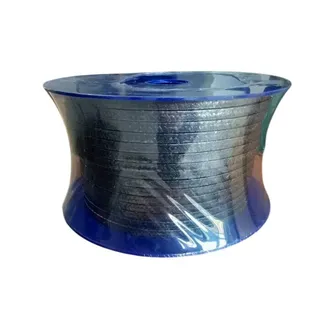
Our Graphite Valve Packing is manufactured using high-quality graphite fiber yarn reinforced with stainless steel wire, ensuring superior strength and durability. It meets the API 624 standard, making it suitable for demanding industrial applications. The packing can handle pressures up to 350 bar (35 MPa) and is available in sizes ranging from 1/8 to 2 inches. With a density of 1.35 g/cm³, it provides excellent sealing performance and reliability, making it an ideal choice for high-pressure valve applications.
Compression packing is the primary sealing elements used in stuffing boxes of valves. The packing consists of soft, flexible materials that is compressed by a gland to form a tight seal around the valve stem. The packing must meet multiple performance requirements, including:
To satisfy these demands, a variety of packing constructions and materials have evolved over time, balancing performance with cost-effectiveness.
Valve packing materials are chosen to meet the demands of temperature, pressure, chemical compatibility, and wear resistance. Traditional asbestos has been largely replaced by safer options such as PTFE, aramid fibers, graphite, and lubricated vegetable fibers, while metal-reinforced or composite packing provides extra strength for high-pressure applications. The choice of material directly affects sealing performance, friction, and durability, making it a critical factor in valve packing design.
Historically, asbestos was commonly used in valve packing. Due to health concerns, it has largely been replaced by safer alternatives such as:
Some types of packing incorporate twisted or folded metal ribbons to enhance strength for high-pressure applications. These are often used in combination with fibrous or polymer-based materials.
Lubricants reduce friction and wear between the valve stem and the packing:
The effectiveness of valve packing depends not only on the materials used but also on how the packing seals against the valve stem and stuffing box. Different packing designs, compression, lip-type, squeeze-type, and thrust packing, use axial compression, fluid pressure, or elastic strain to create a reliable seal, with each type tailored to specific pressure, temperature, and operational requirements. Understanding these mechanisms is essential for ensuring leak-free performance and minimizing wear or friction.
Sealing action in compression packing occurs when the gland compresses the packing axially, causing lateral expansion against the stem and stuffing box walls. Factors influencing sealing include:
At high fluid pressures, sealing becomes automatic below the gland, where fluid pressure forces the packing against clearances to maintain the seal.
Soft rubber packing provides uniform lateral pressure but can grip the stem, increasing operating torque. They are commonly used as O-rings, offering a narrow contact surface to reduce friction.
Lip-type packing, often V-shaped, expands laterally due to fluid pressure acting on flexible lips. Common materials include virgin or filled PTFE, fabric-reinforced rubber, and leather. Advantages include:
They are widely used in narrow stuffing boxes and for applications where minimal manual tightening is desired.
Squeeze packing relies on elastic strain to maintain lateral preload. Most are elastomer-based, including O-rings. Fluid pressure enhances the seal by pushing the packing into gaps between the stem and back-up support. Key design factors include:
Thrust packing is mounted between shoulders on the valve stem and bonnet, allowing axial movement while maintaining a seal. Fluid pressure improves the initial seal by forcing the stem shoulder into contact with the packing.
Stainless steel valve stems, particularly AISI 410 (13Cr) steel, are susceptible to corrosion under wet packing. Key points include:
Corrosion often occurs during storage after hydrostatic testing, not during active service.
The mechanism involves galvanic action where oxygen-deprived sites become anodic, aggravated by graphite in the packing.
Effective protection requires:
High-chromium and nickel-containing stainless steels show better resistance to packing-induced corrosion due to faster formation and better retention of passive oxide films.
Valve packing is a complex yet essential component of valve design, balancing mechanical strength, fluid compatibility, temperature resistance, and friction characteristics. Modern advancements, such as PTFE, aramid, and V-shaped lip packing, offer improved performance, longevity, and safety. Proper selection, installation, and maintenance of valve packing are critical to ensuring leak-free operation and minimizing corrosion or extrusion, particularly in demanding industrial applications.