China Gasket Manufacturer

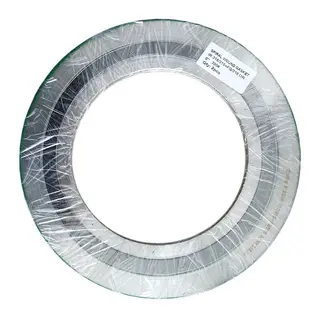
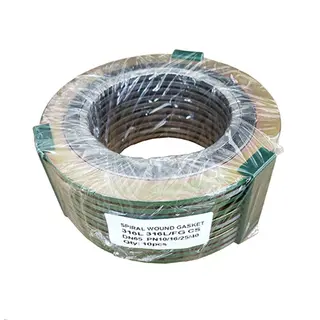
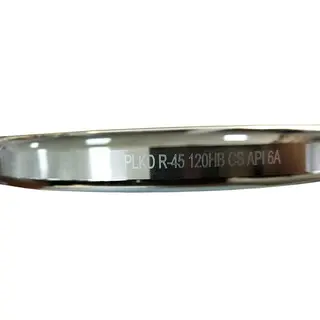
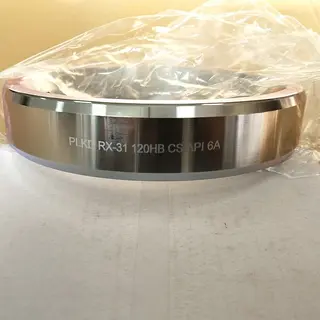
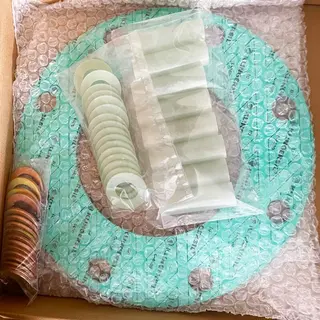
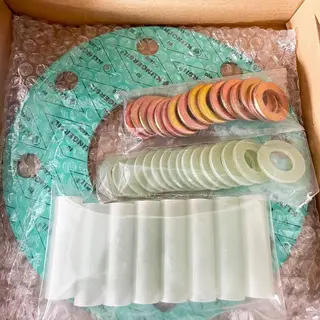
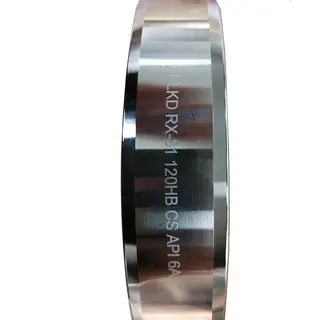
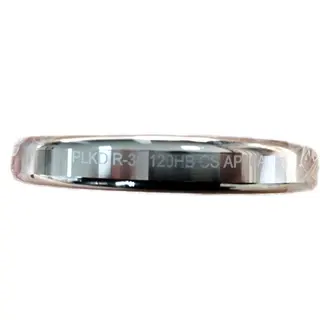

A gasket is a mechanical seal designed to fill the space between two or more mating surfaces, primarily to prevent leakage of fluids, liquids or gases, while under compression. Gaskets are critical in ensuring reliability and safety in machinery, piping systems, engines, and industrial equipment. They not only compensate for surface irregularities but also resist extrusion and creep under operating conditions, making them essential in high-pressure, high-temperature, and chemically aggressive environments.
The primary function of a gasket is to prevent the escape or ingress of fluids. For effective sealing, a gasket must be slightly deformable to tightly fill the designated space, including any minor surface imperfections. While most gaskets work effectively without additional sealing agents, certain applications require the use of sealants applied directly to the gasket surface to ensure proper performance.
A high-performance gasket should ideally possess the following characteristics:
No single material meets all these ideal requirements; therefore, gaskets are often engineered using reinforcements, composite layers, or design modifications to overcome material limitations and achieve optimal performance.
Selecting the appropriate gasket requires careful consideration of:
Compressive load resistance is one of the most important properties in industrial applications. Gaskets are frequently subjected to loads of 14 MPa (2,000 psi) or higher, which directly influences their lifespan. The hot compression test is a widely accepted method to evaluate a gasket’s performance under high temperature and pressure. In this test, the gasket is compressed between hydraulic press bolts while temperature is incrementally raised, often up to 600°F, and thickness changes are measured to assess effectiveness.
While gaskets are ideal for sealing joints, other devices like shims or o-rings may be better suited for specific tasks:
Gaskets are generally categorized into three main types:
Made from composite sheet materials, these gaskets suit low- to medium-pressure applications and can also handle extreme chemical or temperature conditions with careful selection. Common materials include:
Standards: ASME B16.21 specifies types, sizes, materials, tolerances, and markings for non-metallic flat gaskets.
These gaskets combine metallic strength with non-metallic sealing surfaces, offering resilience and conformability. Suitable for low and high pressure/temperature applications, they include:
Standards: ASME B16.20 covers dimensions, tolerances, and materials.
Formed entirely from metal, these gaskets are used in high-pressure, high-temperature applications. They rely on deformation or coining into the flange surfaces to create a seal, often requiring high seating loads. Examples include:
Standards: ASME B16.20 governs materials, dimensions, and tolerances for metallic and semi-metallic gaskets.
Jacketed Gaskets: Combine soft sealing materials with a metal jacket for enhanced temperature, pressure, and corrosion resistance. Variants include: Single-jacketed: metal coating on one face; Double-jacketed: metal coating on both faces; Corrugated or French-style jackets for specific applications
Gaskets are indispensable in industrial systems, providing reliable sealing solutions across a wide range of temperatures, pressures, and chemical environments. Choosing the correct gasket requires understanding material properties, application demands, flange design, and operational pressures. From non-metallic composites to spiral wound and solid metallic types, the diversity of gaskets ensures that engineers can achieve optimal performance, safety, and longevity in every application.
Gasket Standards
ASME B16.20, ASME B16.2, ASME B16.5, ASME B16.47
ANSI B16.20, ANSI B16.5, ANSI B16.47, ANSI B16.21
API 6A, API 605
NORSOK, NORSOK L-005
MSS SP-44, BS 1560, DIN, JIS, JPI, HG, SH
Gasket Materials
Carbon Steel
SS 304, SS 304L
SS 316, SS 316L
SS347, SS347L, SS321
Hastelloy B3, Hastelloy C276
Incoloy 800, Incoloy 825
Alloy 20
Monel 400
Inconel 600, Inconel 625, Inconel X750
Titanium, Nickel200, G7, G10, G11, Phenolic, CR+Phenolic, RPTFE, Nitrile, EPDM, CR, Viton, Teflon, Mylar, Nomex, Rubber, Neoprene, Asbestos, Non Asbestos, NBR, PTFE, E-PTFE
Gasket Sizes
DN15, DN20, DN25, DN32, DN40, DN50, DN65, DN80, DN90, DN100, DN125, DN150, DN200, DN250, DN300, DN350, DN400, DN450, DN500, DN550, DN600, DN650, DN700, DN750, DN800, DN850, DN900, DN950, DN1000, DN1050, DN1100, DN1150, DN1200
1/2 Inch, 0.5 Inch, 3/4 Inch, 0.75 Inch, 1 Inch, 11/4 Inch, 1.25 Inch, 11/2 Inch, 1.5 Inch, 2 Inch, 21/2 Inch, 2.5 Inch, 3 Inch, 31/2 Inch, 3.5 Inch, 4 Inch, 5 Inch, 6 Inch, 8 Inch, 10 Inch, 12 Inch, 14 Inch, 16 Inch, 18 Inch, 20 Inch, 22 Inch, 24 Inch, 26 Inch, 28 Inch, 30 Inch, 32 Inch, 34 Inch, 36 Inch, 38 Inch, 40 Inch, 42 Inch, 44 Inch, 46 Inch, 48 Inch
R11, R12, R13, R14, R15, R16, R17, R18, R19, R20, R21, R22, R23, R24, R25, R26, R27, R28, R29, R31, R32, R33, R34, R35, R36, R37, R38, R39, R40, R41, R42, R43, R44, R45, R46, R47, R48, R49, R50, R51, R52, R53, R54, R55, R56, R57, R58, R59, R60, R61, R62, R63, R64, R65, R66, R67, R68, R69, R70, R71, R72, R73, R74, R75, R76, R77, R78, R79, R80, R81, R82, R84, R85, R86, R87, R88, R89, R90, R91, R93, R94, R95, R96, R97, R98, R100, R101, R102, R103, R104, R105
RX20, RX23, RX24, RX26, RX27, RX31, RX37, RX39, RX41, RX44, RX45, RX46, RX49, RX50, RX53, RX54, RX57, RX63, RX65, RX69, RX73, RX82, RX84, RX85, RX86, RX87, RX88, RX89, RX90, RX91, RX99, RX201, RX205, RX210, RX215
BX150, BX151, BX152, BX153, BX154, BX155, BX156, BX157, BX158, BX159, BX160, BX161, BX162, BX163, BX164, BX165, BX166, BX167, BX168, BX169, BX170, BX171, BX172, BX303
IX15, IX20, IX25, IX40, IX50, IX65, IX80, IX100, IX125, IX150, IX200, IX250, IX300, IX350, IX400, IX450, IX500, IX550, IX600, IX650, IX700, IX750, IX800, IX850, IX900, IX950, IX1000, IX1050, IX1100, IX1150, IX1200
Material for Fillers
FG Flexible Graphite, Flexible Graphite, Asbestos, Non Asbestos, PTFE, MICA, CER, Ceramic, E-PTFE, NAF, ASB
Gasket Thickness
1.5mm, 3mm, 3.2mm, 4.5mm, Customized
Gasket Coatings
Oil, Zinc Coating, PTFE Coating
Colors of PTFE
Blue, Yellow, Orange, Black
Gasket Pressure
Class 150, 300, 400, 600, 900, 1500, 2500 LB
5000 PSI, 10000 PSI, 15000 PSI, 20000 PSI